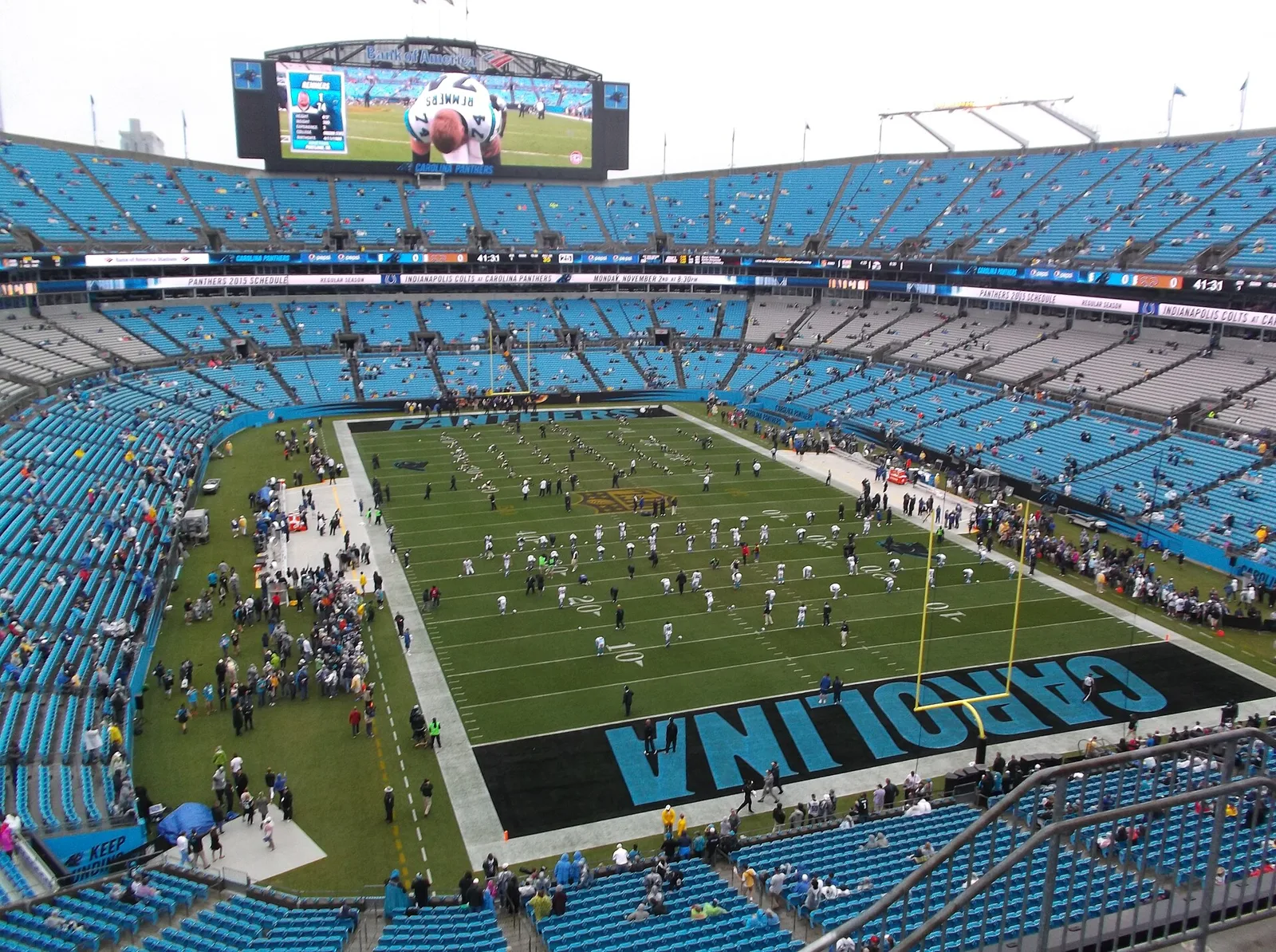
Charlotte had paid about $3.1 million of its $650 million for Bank of America Stadium by August, the state auditor says: $2.5 million on construction, $632,656 on borrowing costs.
Charlotte had paid out about $3.1 million of the up to $650 million it has promised for Bank of America Stadium by the end of August. That is the first public account of the spending, from the North Carolina Office of the State Auditor.
The office released its first report on the project Wednesday. About $2.5 million went on construction and $632,656 on the costs of borrowing the money, the report says.
The report is not an audit. It sets out how the deal works and what has been spent, and makes no findings. The auditor’s office said separate audit work is under way and later reports will follow as the city borrows and spends more.
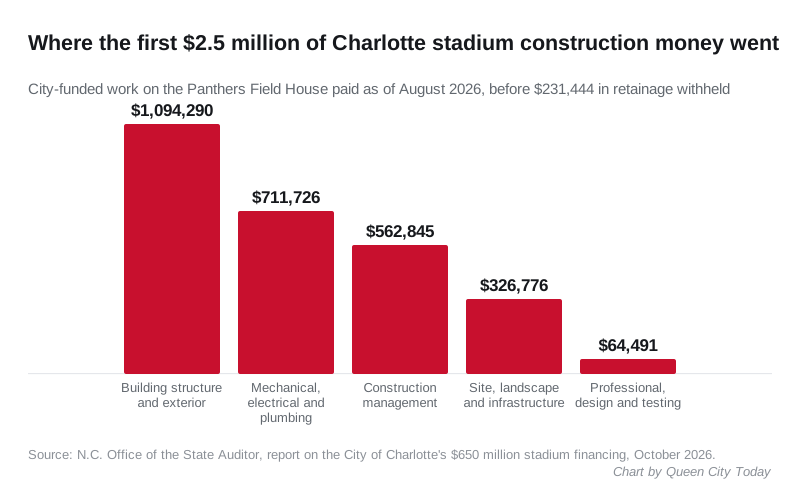
Where the first construction money went
The first city-funded construction payment was made in August. It paid for ongoing construction of the Panthers Field House, the report says.
| Spending area | Amount | Examples |
|---|---|---|
| Building structure and exterior | $1,094,290 | steel, roofing, masonry, doors |
| Mechanical, electrical and plumbing | $711,726 | HVAC, electrical rough-in, piping |
| Construction management | $562,845 | contractor fees, overhead, equipment rental |
| Site, landscape and infrastructure | $326,776 | storm drainage, curbs, excavation, turf |
| Professional, design and testing | $64,491 | architects, engineers, inspections |
| Retainage withheld | -$231,444 | held back until work progresses |
| Total paid | $2,528,684 |
The report says the auditor’s office sorted the invoices into these categories with help from an AI assistant, CoPilot, and placed each expense by professional judgment.
The borrowing costs break down this way:
- legal services: $298,160
- financial advisory services: $255,096
- credit-rating services: $42,400
- trustee and agent services: $24,000
- offering-document costs: $13,000
The whole project
The renovation of the stadium and related buildings is now projected to cost $1.3 billion, with completion expected by the end of 2030, the report says. The money comes from three places:
- up to $650 million from the City of Charlotte, borrowed through bonds
- $150 million that Tepper Sports & Entertainment committed under its deal with the city
- another $500 million Tepper Sports & Entertainment announced in July 2026
Tepper Sports & Entertainment owns the Carolina Panthers and Charlotte FC. It is also responsible for cost overruns on the elements the city required, the report says.
The City Council approved the deal 7-3 in June 2024. The state Local Government Commission, which includes the state auditor, unanimously approved the city’s borrowing on April 1.
“We’re providing the public with ongoing transparency on stadium renovations, rather than stepping in late after the taxpayer-funded project is completed,” State Auditor Dave Boliek said in a news release.
What the city’s money buys
The city-funded work that fans will see includes:
- a new social patio on the 500 level with city views
- new scoreboards and videoboards, Wi-Fi and audio systems
- new seating
- renovated restrooms
- a new exterior facade
The city is also paying for the Panthers’ new training facility and for renovated locker rooms and player spaces. Its money covers aging mechanical, electrical and plumbing systems, elevators, and safety and security work as well.
The city will own the training facility, and the team will lease it. Tepper Sports & Entertainment is paying for new premium and club areas, concessions, and a 4,400-person concert venue next to the stadium.
Who repays the debt
The city plans to repay the borrowing from two Mecklenburg County hospitality taxes, the report says. Both go into a restricted fund. City policy limits it to the convention center, tourism promotion, amateur sports facilities and stadiums with more than 60,000 seats. Bank of America Stadium is the only one in Charlotte that size. The two taxes are:
- a 3% occupancy tax on hotel rooms and short-term rentals such as Airbnb
- a 1% prepared food and beverage tax, paid mainly at restaurants and caterers
The city budgeted $56.8 million from the food and beverage tax and $33 million from the occupancy tax for the fiscal year that runs through June 2027.
How long the teams have to stay
The deal is meant to keep the Panthers and Charlotte FC in Charlotte until 2040. The report lists these later dates:
- April 2037: the city and the team owner must start good-faith talks about a possible new stadium. Neither is committed to build or pay for one.
- August 2039: the owner may start relocation talks.
- About February 2040: after the 2039-40 NFL season, the owner may end the lease early. If that happens before 2046, it must pay off the rest of the city’s stadium debt.
- April 2046: the non-relocation agreements expire.
What it means for you
- Who pays it back: the city plans to repay the stadium debt from the hotel and restaurant taxes, the report says. Our property taxes guide explains what your own tax bill pays for.
- If you eat out or book a hotel in Mecklenburg County, part of the tax on that bill goes into the fund that will repay this debt.
- More reports are coming. The auditor’s office plans updates on how much the city borrows and spends, construction progress and any big changes, and will report its audit findings separately.
For more on the area around the stadium, see our Uptown Charlotte guide.
Have your say