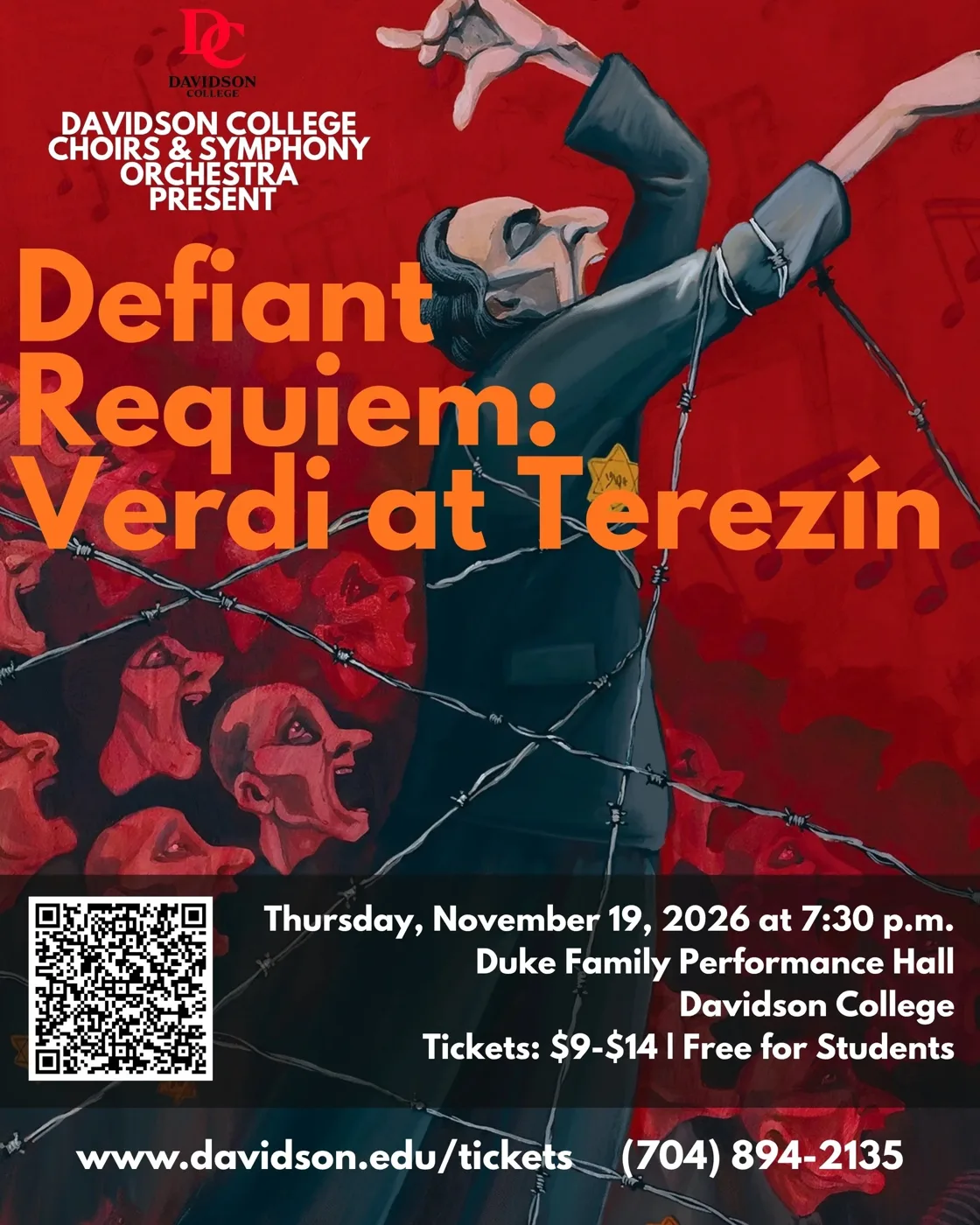
Davidson College choirs and orchestra perform Defiant Requiem, the story of Verdi's Requiem sung by Terezín prisoners, Nov. 19. Tickets $9-14, students free.
Davidson College will perform Verdi’s Requiem for the first time in its history on Thursday, Nov. 19, and it will do so inside the story of the Jewish prisoners who sang the same work in the Nazi ghetto of Terezín during the Holocaust.
Defiant Requiem: Verdi at Terezín starts at 7:30 p.m. in Duke Family Performance Hall on the college’s campus in Davidson, in north Mecklenburg County. The Davidson College Choirs and Symphony Orchestra are joined by community singers and four guest soloists. Tickets are $14 for adults and $9 for seniors, and students get in free.
What happened at Terezín
According to the college, Czech Jewish pianist and conductor Rafael Schächter, himself a prisoner at Terezín (Theresienstadt), assembled a choir of about 150 fellow prisoners in 1943. He taught them Verdi’s score largely by rote, from a single copy he had brought with him when he was deported from Prague, and they rehearsed on a damaged piano found in a barracks basement.
As singers were deported to Auschwitz, Schächter rebuilt the choir again and again. Between 1943 and 1944 the prisoners performed the Requiem 16 times, the college says, including once before Nazi officials and representatives of the International Red Cross.
Verdi’s Messa da Requiem, written in 1874, sets the Catholic Mass for the Dead. The college’s release asks the question at the center of the production: “Why would Jewish prisoners in a Nazi ghetto choose to perform a Catholic Mass for the Dead?”
Its answer lies in the Latin text. “Schächter recognized that the Latin text could communicate what the prisoners could not safely express openly,” the release says. “In the Dies irae (Day of Wrath), for example, the words envision a final judgment in which nothing hidden will remain concealed and no evil will go unanswered.” Survivor and choir member Edgar Krasa later recalled Schächter’s conviction that the prisoners could sing to their captors what they could not say.
The college also points to the paradox of that cultural life. Prisoners at Terezín sustained concerts, operas, plays and lectures, but “the very artistic achievements that helped prisoners preserve their dignity were appropriated by their captors,” including through a staged Red Cross visit and a propaganda film.
What audiences will see
Defiant Requiem was created by conductor Murry Sidlin. It sets a complete performance of Verdi’s Requiem alongside survivor testimony, archival footage and dramatic scenes drawn from the experiences of the imprisoned musicians.
The guest soloists are soprano Melinda Whittington, who is on Davidson’s voice faculty; mezzo-soprano Dawn Pierce; tenor Patrick Parker; and baritone Joshua Coleman. The combined Davidson choirs are directed by Renata Dworak Berlin, the college’s director of choral activities.
How the students prepared
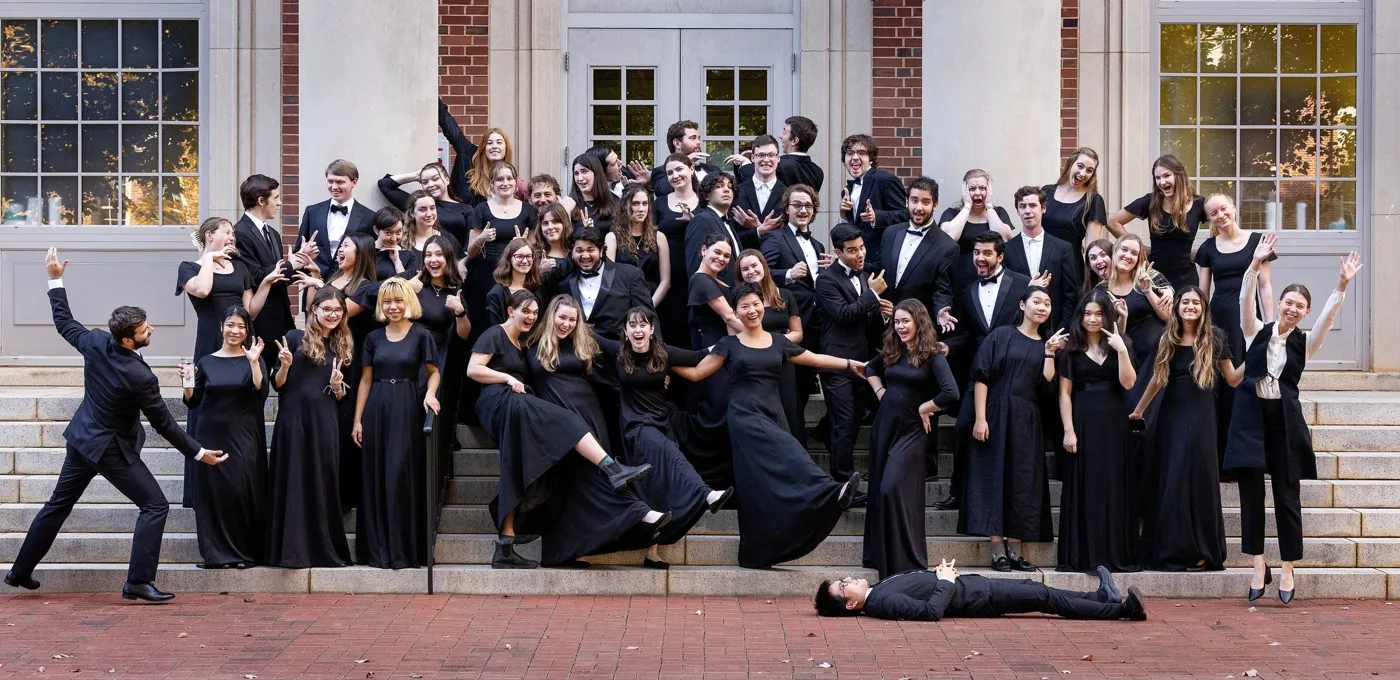
Berlin said the project has gone well beyond the music. “This project has been a significant educational experience for our students, who have engaged with Holocaust history, the complexities of artistic expression under oppression, and the enduring power of music,” she said. “Their work also builds on our choral program’s recent international experiences in Poland and Germany.”
The singers have studied the history of Terezín, watched the Defiant Requiem documentary and worked through English translations of the Latin to understand what the words meant to those who sang them in the ghetto, the college says.
Earlier trips shaped that work. The choirs have visited Auschwitz-Birkenau, where many prisoners deported from Terezín, including members of Schächter’s choir, were murdered. In June 2026 the Davidson College Chamber Singers toured Germany and performed Psalm by Felicitas Kukuck (1914-2001), a German composer of partial Jewish ancestry who survived Nazi persecution with the help of falsified identity papers. The piece sets poetry by Paul Celan, a Jewish Holocaust survivor.
“From encounters with the physical sites of Holocaust history to performing music shaped by its consequences, Davidson singers have explored how artistic expression can bear witness to suffering, preserve memory, and confront questions that resist easy answers,” the college says.
Sidlin, who also founded the Defiant Requiem Foundation, visits Davidson on Nov. 2 to work with the performers on the musical and historical sides of the project.
If you go
- When: Thursday, Nov. 19, 7:30 p.m.
- Where: Duke Family Performance Hall, Davidson College, Davidson
- Tickets: $14 adults, $9 seniors, free for students, online through Etix or from the Davidson College Box Office at 704-894-2135
- More information: davidson.edu/music and the choirs’ site, DavidsonSings.com
Have your say